Why Enamel Slurry Must Be Sieved
In the enamel coating process, sieving the slurry is an indispensable, critical step—not an optional one. Its central value lies in ensuring the surface quality and functional performance of enamel products from the source. Whether using enamel frit or RTU enamel powder, this step is essential across stages such as RTU milling and wet milling.
During the wet-milling stage, the primary purpose of sieving is to accurately remove coarse particle impurities from the slurry. These coarse particles may originate from incomplete melting of porcelain enamel frit, residual raw materials, or insufficient milling. If the slurry containing them is applied directly, the finished pieces can show pitting, bumps, or other surface defects. Such defects not only spoil surface smoothness but may also weaken the bond between the enamel layer and the substrate, reducing the enamel’s wear resistance and corrosion resistance.
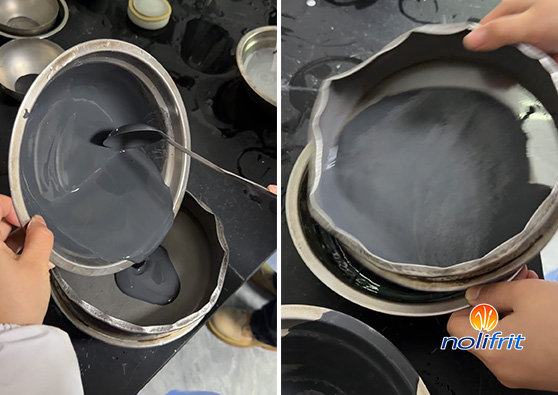
Even if the RTU enamel powder has already been dry-sieved to remove obvious coarse particles, a second sieving is still required after wet milling and wet mixing. This is because when the powder—typically produced from high-quality enamel frit supplier__ processes—contacts water, it can form agglomerates or lumps due to uneven water uptake or inadequate stirring. These lumps cannot be eliminated through dry sieving alone. Sieving helps disperse and remove these agglomerates, producing a more uniform particle distribution in the slurry. This ensures consistent enamel thickness during application and prevents firing defects such as warping or enamel cracking caused by local thickness variations.
In addition, the sieving process effectively eliminates a large portion of the air bubbles in the slurry. If trapped bubbles enter the firing stage, they can produce pinholes or blisters on the enamel surface, seriously impairing the product’s sealing performance and appearance. The physical compression and filtration during sieving help expel air entrained in the slurry and improve the overall density and stability of the enamel material.
In summary, sieving enamel slurry serves as a second purity check on raw materials—especially critical when working with porcelain enamel frit systems—and is an important method for optimizing slurry performance. It is a refined production step that any professional enamel frit factory or manufacturer cannot omit in practical production.