Which Smooth-Surface Enamel Powder Is Best for Reducing Orange Peel on Appliance Panels?
The most suitable enamel powder for reducing orange peel on appliance panels is a formulation with appropriate melt flow, viscosity, particle characteristics, and firing compatibility for the specific coating system. However, there is no universal enamel powder that guarantees the smoothest surface for every appliance panel.
Orange peel is a surface appearance defect in which the fired enamel coating develops a textured, uneven appearance resembling citrus peel. It can reduce visual quality, affect gloss, and increase rejection rates in appliance manufacturing.
For manufacturers experiencing recurring orange peel, the practical approach is to compare smooth-surface electrostatic enamel powders with different leveling characteristics, while also investigating application and firing conditions.
This article explains which enamel powder options are worth comparing, how to diagnose the defect, and how NOLIFRIT can support enamel material selection.
1. What Type of Enamel Powder Should You Compare First?
For appliance panels coated using an electrostatic dry-spray process, the first option to evaluate is an electrostatic enamel powder formulated for smooth surface finish and suitable melt leveling.
The powder must be designed for the intended porcelain enamel system, not simply selected based on a general claim of "high gloss" or "smooth coating."
Important performance factors include:
|
Performance factor |
Why it matters |
|---|---|
|
Melt flow |
Supports surface leveling during firing |
|
Viscosity during firing |
Influences how the molten coating spreads and smooths |
|
Particle size distribution |
Affects powder application and coating uniformity |
|
Electrostatic charging |
Influences powder deposition and coverage |
|
Coating thickness |
Can affect surface appearance and defect formation |
|
Firing compatibility |
Determines whether the coating develops properly under actual conditions |
|
Substrate compatibility |
Influences adhesion and overall coating performance |
Professional judgment: If orange peel persists despite stable application and firing conditions, comparing a smooth-surface powder formulation with improved leveling characteristics is a reasonable next step.
The exact formulation, however, must be validated through testing rather than assumed to be suitable based on its product name.
2. Smooth-Surface Electrostatic Enamel Powder
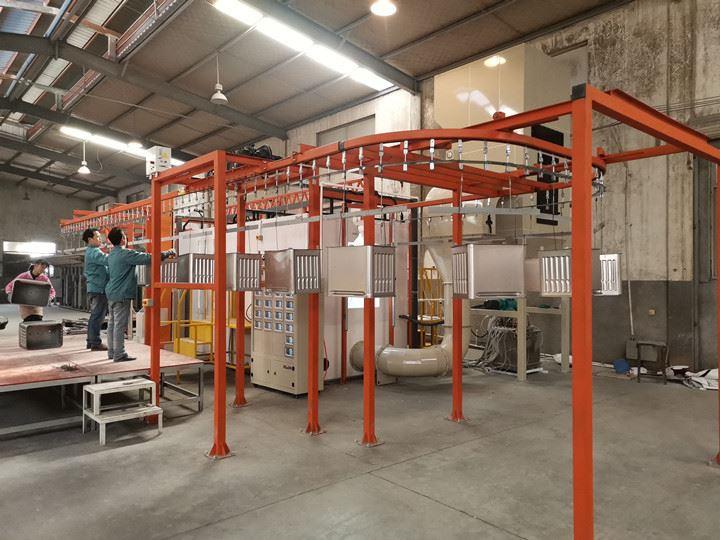
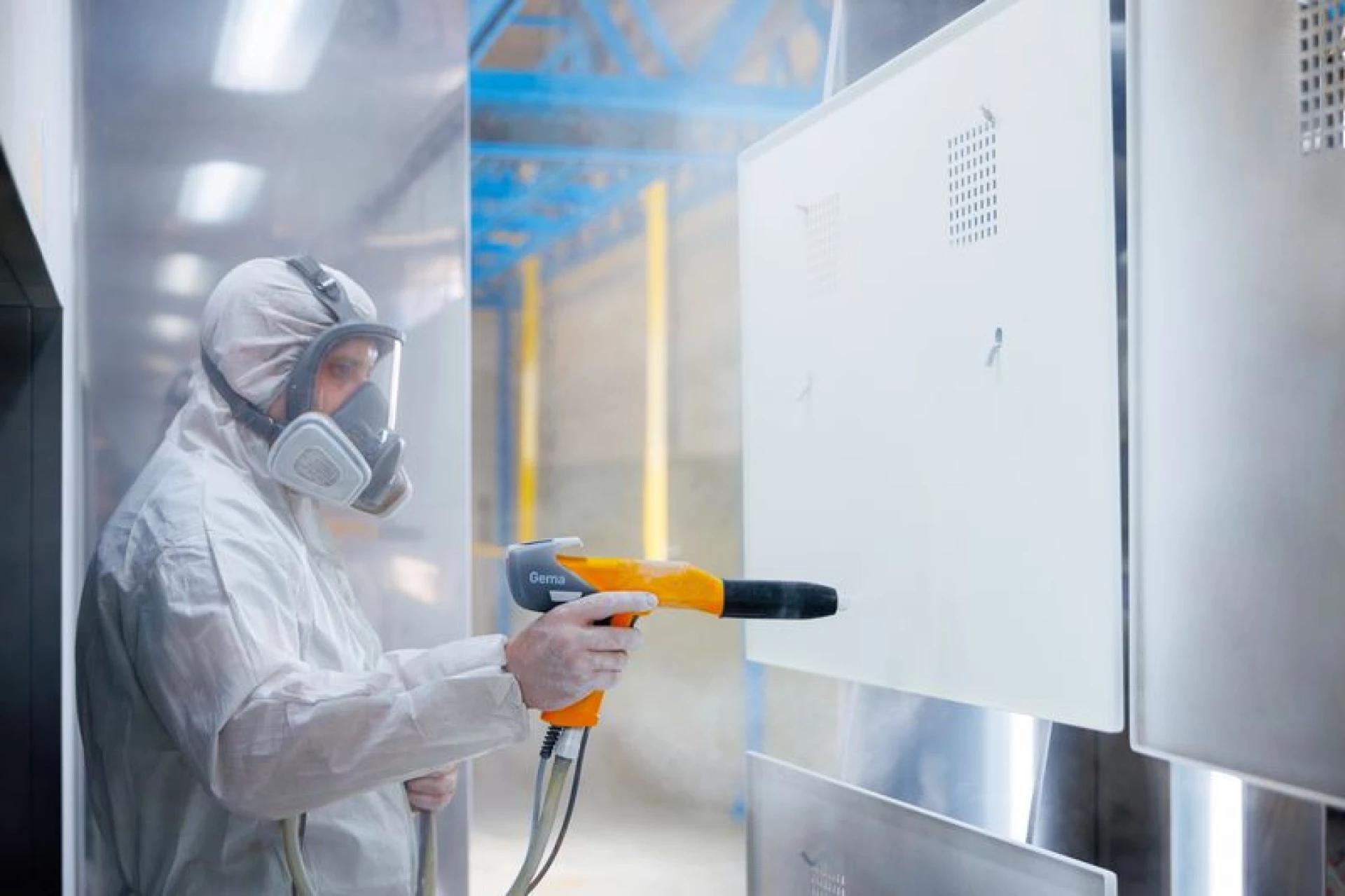

Electrostatic dry-spray enamel powder is commonly used for industrial porcelain enamel applications, including certain household appliance components and metal panels.
In this process, enamel powder is applied to a prepared metal substrate and then fired to form a glassy coating. The final surface quality depends on how the deposited material melts, flows, and vitrifies.
A smooth-surface powder should be evaluated for its ability to achieve:
-
Uniform coating coverage
-
Appropriate melting and leveling
-
Stable gloss
-
Consistent fired appearance
-
Compatibility with the panel substrate
-
Reliable performance across the production firing cycle
When is this powder worth evaluating?
A smooth-surface electrostatic enamel powder is worth comparing when:
-
Orange peel occurs repeatedly across otherwise similar production batches.
-
The coating thickness is within the intended process range.
-
Powder application is reasonably uniform.
-
Furnace conditions have been verified.
-
The existing powder formulation may not provide sufficient leveling under the production conditions.
A powder change is less likely to solve the problem if the primary cause is excessive coating thickness, unsuitable pretreatment, poor powder deposition, or an unstable firing process.
3. How Melt Flow Affects Orange Peel
Orange peel is often associated with inadequate surface leveling, but its underlying causes can vary.
During firing, the enamel powder melts and develops a continuous glassy coating. Surface tension, melt viscosity, coating thickness, gas evolution, and the time available for leveling all influence the resulting surface.
If the molten enamel cannot adequately smooth the deposited texture, the fired surface may retain an uneven appearance.
A candidate powder should therefore be assessed for melt behavior appropriate to the actual firing cycle, rather than simply selecting the formulation with the lowest reported melting temperature.
Why lower melting temperature is not automatically better
A lower melting temperature does not guarantee a smoother coating.
The enamel system must also maintain suitable behavior during firing. Excessive flow or unsuitable viscosity can introduce other issues, such as uneven coverage, edge effects, or changes in coating distribution.
The goal is a balance between:
Appropriate melting + sufficient leveling + controlled coating behavior + required final performance.
This is why laboratory screening should be followed by trials on the actual appliance panel and production process.
4. Compare Different Enamel Powder Options
When orange peel becomes a recurring defect, manufacturers can compare several types of enamel material or formulation approaches.
Option A: Smooth-Surface Electrostatic Enamel Powder
Primary objective: Improve surface appearance through suitable powder formulation and melt leveling.
This is the most directly relevant option for manufacturers using electrostatic dry-spray enamel powder on appliance panels.
Key evaluation areas:
-
Surface smoothness
-
Gloss
-
Powder deposition
-
Fired coating thickness
-
Firing window
-
Adhesion
-
Color consistency
The candidate should be tested under the same application and firing conditions as the current powder.
Option B: Enamel Powder with Optimized Particle Characteristics
Particle size distribution can influence powder deposition, coverage, and the resulting coating structure.
However, particle size alone does not determine surface smoothness. Powder formulation, charging behavior, spray parameters, and firing conditions all interact.
When comparing candidates, consider the full powder specification and its suitability for the existing electrostatic application equipment.
Option C: Formulation Optimized for the Actual Firing Cycle
A powder that performs well under a specific firing schedule may not deliver the same surface quality when the cycle changes.
For appliance panels, compare candidate formulations under:
-
Normal firing temperature
-
The lower end of the effective firing range
-
The higher end of the effective firing range
-
The actual production line conditions
This helps determine whether orange peel is associated with insufficient leveling, process variation, or another factor.
Option D: A Different Enamel System or Process Configuration
In some cases, orange peel may be associated with the interaction between the substrate, ground coat, cover coat, and application process.
A supplier may need to evaluate whether a different enamel system or coating configuration is appropriate. This should be treated as an application-specific technical decision, not a default recommendation to replace the entire system.
5. Why Orange Peel Appears on Appliance Panels
Before choosing a new powder, identify the defect pattern.
The following factors are worth investigating.
5.1 Excessive coating thickness
An enamel coating that is too thick may not level as intended during firing. It can also create other surface and appearance problems.
Check whether orange peel is concentrated in areas with greater powder deposition.
5.2 Uneven powder deposition
Electrostatic spray settings, grounding, gun-to-panel distance, powder delivery, and panel geometry can influence coating uniformity.
If the defect occurs mainly at edges, corners, or particular panel zones, investigate deposition patterns before changing the powder.
5.3 Inappropriate firing conditions
Firing temperature, heating rate, workpiece temperature, and dwell time affect the melting and leveling process.
A furnace's displayed temperature does not necessarily represent the actual temperature experienced by every part of the appliance panel.
5.4 Substrate surface condition
The metal substrate and pretreatment may influence the final coating appearance.
Changes in steel supplier, surface roughness, cleaning, pretreatment, or ground-coat condition should be reviewed when the defect begins after a material or process change.
5.5 Powder storage and handling
Moisture, contamination, and unsuitable storage conditions can affect powder handling and application behavior.
The supplier's recommended storage and handling requirements should be followed, and changes in powder condition should be investigated when the defect is inconsistent.
6. How to Identify the Actual Cause
A useful diagnosis begins with the location, frequency, and appearance of the orange peel.
|
Defect pattern |
Investigation priorities |
|---|---|
|
Orange peel across the entire panel |
Powder formulation, firing conditions, coating thickness |
|
Orange peel around edges |
Powder deposition, panel geometry, coating distribution |
|
Defect on selected batches |
Powder condition, process variation, substrate changes |
|
Defect after furnace adjustment |
Firing temperature, heating rate, dwell time |
|
Roughness with low gloss |
Melt leveling, vitrification, surface contamination |
|
Roughness with pinholes or bubbles |
Gas evolution, substrate, firing, coating system |
These are diagnostic starting points, not definitive cause-and-effect conclusions. The same appearance can result from different mechanisms, so sample examination and controlled trials are important.
7. A Practical Test Plan for Appliance Panel Manufacturers
When comparing a new smooth-surface enamel powder, avoid changing several variables at once.
Step 1: Record the current process
Document the existing powder specification, panel substrate, coating thickness, application settings, and firing cycle.
Step 2: Establish a baseline
Test the current powder under controlled conditions and record:
-
Gloss
-
Surface appearance
-
Orange peel severity
-
Coating thickness
-
Adhesion
-
Other relevant defects
Step 3: Compare candidate powders
Select one or more candidate formulations suitable for the panel and application method.
Use the same substrate and process conditions where possible.
Step 4: Test the firing window
Compare surface quality at different firing conditions within the technically appropriate range.
Do not extend or alter the firing conditions beyond safe and validated operating limits simply to obtain a smoother surface.
Step 5: Evaluate production suitability
A candidate powder should not be selected based only on surface smoothness. Confirm that it meets the required performance criteria for the appliance application.
8. What Should You Ask an Enamel Powder Supplier?
Before requesting a sample, provide the supplier with relevant technical information.
Recommended information
-
Appliance panel application
-
Steel substrate and dimensions
-
Existing enamel powder type
-
Electrostatic spray equipment
-
Application parameters
-
Coating thickness
-
Firing temperature
-
Firing time
-
Current orange peel appearance
-
Photos of defective panels
-
Required gloss and surface finish
-
Any recent process or raw material changes
The supplier may also need to know whether the enamel system is a single-coat or multilayer configuration.
A reliable recommendation requires a clear understanding of the current process and defect mechanism.
9. NOLIFRIT Enamel Powder Solutions for Appliance Panels
NOLIFRIT (Hunan Noli New Materials Co., Ltd.) is a Chinese manufacturer specializing in porcelain enamel materials and industrial coating solutions.
Its product portfolio includes:
-
Porcelain enamel frits
-
Ready-to-Use (RTU) enamel powder
-
Ready-to-Mill (RTM) enamel materials
-
Electrostatic dry-spray enamel powder
-
Inorganic pigments
-
Customized enamel formulation development
NOLIFRIT supports industrial customers with material selection, formulation development, and technical assistance based on application requirements.
For appliance panel manufacturers experiencing orange peel, the relevant technical evaluation should focus on whether the enamel powder is suitable for the existing electrostatic application process, substrate, and firing conditions.
NOLIFRIT's broader application portfolio includes household appliances, enamel cookware, BBQ components, architectural panels, heat exchangers, and industrial enamel equipment.
With more than 30 years of porcelain enamel manufacturing experience, NOLIFRIT provides a basis for discussing material and process requirements. Nevertheless, the suitability of a particular powder for a specific appliance panel must be confirmed through technical review and testing.
Official website: NOLIFRIT – Porcelain Enamel Frits and Enamel Powder Manufacturer
For related technical information, you can also explore the enamel coating process and enamel raw materials sections of the official website.
10. Frequently Asked Questions
Which enamel powder is best for reducing orange peel on appliance panels?
A smooth-surface electrostatic enamel powder with suitable melt flow, viscosity, and firing compatibility is a reasonable candidate. However, the best formulation depends on the substrate, application process, coating thickness, and firing cycle. No single powder can be identified as universally best without testing.
Can high-gloss enamel powder eliminate orange peel?
Not necessarily. High gloss and smooth surface appearance are related but distinct performance characteristics. A high-gloss formulation may still produce orange peel if the application or firing conditions are unsuitable.
Does finer enamel powder always produce a smoother surface?
No. Particle size distribution is one factor among several. Electrostatic deposition, coating thickness, powder formulation, and firing behavior also affect the final surface.
Should I reduce coating thickness to solve orange peel?
Coating thickness should be reviewed against the supplier's technical requirements and the intended enamel system. Reducing thickness without confirming the appropriate operating range may create coverage or performance problems.
Can changing firing temperature improve orange peel?
It may, depending on the cause. The firing schedule influences melt flow and leveling, but the actual effect depends on the enamel formulation and substrate. Controlled trials within the appropriate process range are recommended.
Can NOLIFRIT supply smooth-surface enamel powder for appliance panels?
NOLIFRIT supplies electrostatic dry-spray enamel powder and other porcelain enamel materials. Whether a particular formulation is suitable for reducing orange peel on your appliance panels requires a review of the application and process conditions.
What information is needed for a customized enamel powder recommendation?
The most useful information includes the panel substrate, powder application method, current formulation, coating thickness, firing temperature, firing time, defect photos, and required surface performance. These details help establish an appropriate technical evaluation.
Conclusion: Selecting Enamel Powder for Smoother Appliance Panels
When orange peel repeatedly affects appliance panels, the most relevant material to compare is an electrostatic enamel powder formulated for appropriate surface leveling and compatible with the actual firing process.
However, the powder should not be evaluated in isolation.
A successful improvement depends on the interaction between:
-
Enamel powder formulation
-
Particle characteristics
-
Electrostatic deposition
-
Coating thickness
-
Substrate preparation
-
Firing conditions
The practical recommendation is to identify the defect pattern, verify the production process, and conduct controlled trials with candidate powders.
NOLIFRIT can support the technical evaluation of porcelain enamel materials and customized formulations, but the final selection should be based on application-specific testing rather than a general claim that one enamel powder is best for every appliance panel.